Why the Moon Looks Upside Down in the Southern Hemisphere
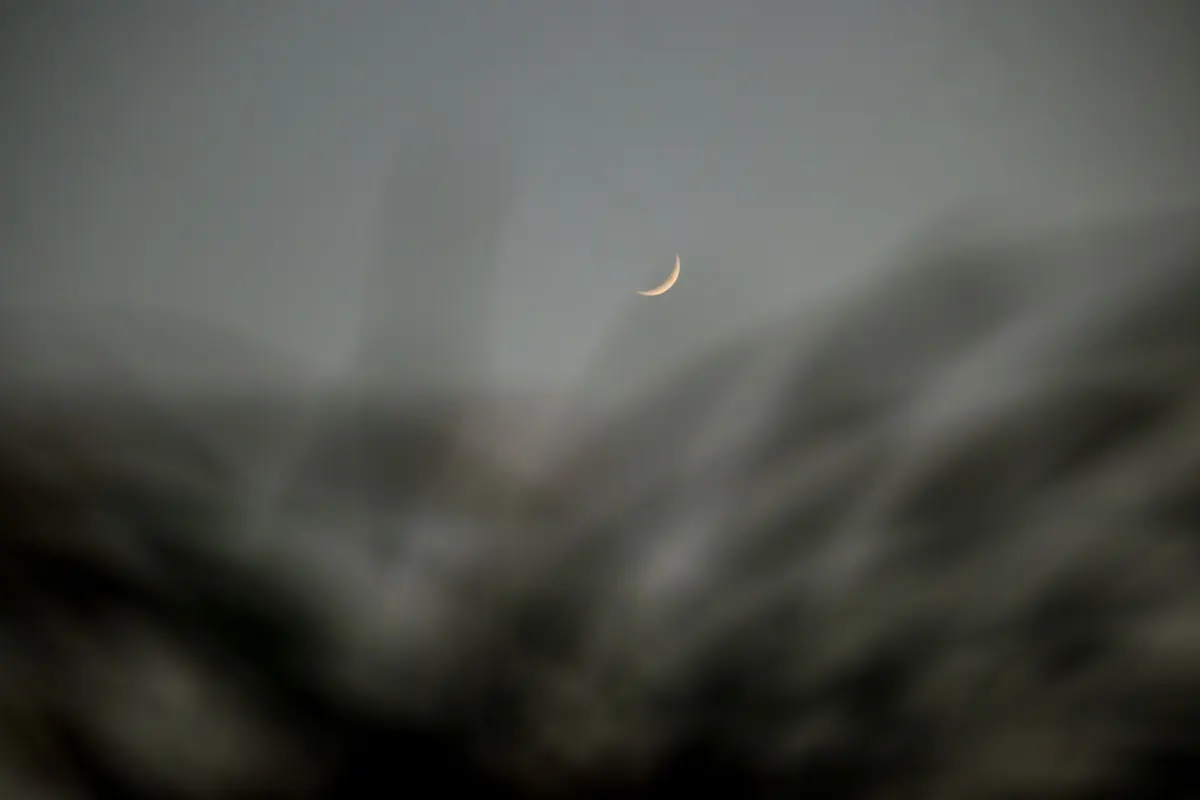
Compare a photo of the Moon taken in Toronto with one taken in Santiago on the same evening and the mismatch is immediate. One shows a thin crescent leaning like a tipped bowl; the other shows the same sliver tilted the opposite way, with the seas and bright craters rearranged. The dark patches that make up the Man in the Moon appear to be standing on his head. Nothing happened to the Moon in the hours between those two pictures. The only thing that moved was the observer.
The Moon Doesn't Know Which Way Is Up
There is no natural orientation to a sphere floating in space. When we say the Moon looks upside down, we mean upside down relative to the view we grew up with, which is a statement about us, not about the Moon.
Your personal "up" is the line from your feet to the point directly over your head, the zenith. Anything you look at is arranged against that line and against your horizon. Two observers standing in different places have zeniths pointing in different directions in space, so the same unchanging disk lands on their sky at different angles. Same Moon, same night, different furniture.
The Sun Decides How the Crescent Leans
Half the Moon is always lit. Which part of that halved sphere faces us determines the phase, and the boundary between light and shadow — the terminator — always bends so the lit limb faces the Sun. This gives you the single most useful rule for reading the sky:
The horns of the crescent always point away from the Sun.
That means the line joining the two tips is roughly perpendicular to the direction from the Moon to the Sun. If the Sun sits almost directly below the Moon, the crescent lies flat, like a smile. If the Sun is off to one side and low, the crescent stands more upright. The shape is not a property of the Moon at all; it is a snapshot of an angle measured from where you happen to be standing.
Why Latitude Is the Deciding Factor
Latitude changes that angle in two ways at once.
First, it changes how steeply the ecliptic — the path the Sun and Moon travel — meets your horizon. Near the equator the ecliptic can rise almost vertically out of the western sky, stacking the Sun and Moon nearly one above the other. At mid-latitudes it climbs at a shallower slant, so the crescent tilts farther over.
Second, it changes which way you face. From northern mid-latitudes the Moon is generally south of you, and looking south puts east on your left. From southern mid-latitudes the Moon is generally north of you, and looking north puts east on your right. The sky gets flipped left to right, and the steepness of the tilt flips with it. Add those two effects together and the disk appears rotated roughly 180 degrees between matched latitudes on opposite sides of the equator.
The change is gradual, not a switch
There is no line at the equator where the Moon suddenly rolls over. Orientation rotates smoothly as you travel. A reader flying from 45°N to 45°S would watch the crescent swing through something close to half a turn. Someone in Nairobi sees a view that is neither the northern one nor the southern one, which is part of why equatorial skywatching confuses travellers so much.
What Actually Looks Different
Once you know the rule, the differences become easy to catalogue. From the Southern Hemisphere, compared with the Northern:
- The lit side of the crescent swaps sides. Face the Moon and look: a waxing crescent is lit on its right-hand edge from the north, on its left-hand edge from the south.
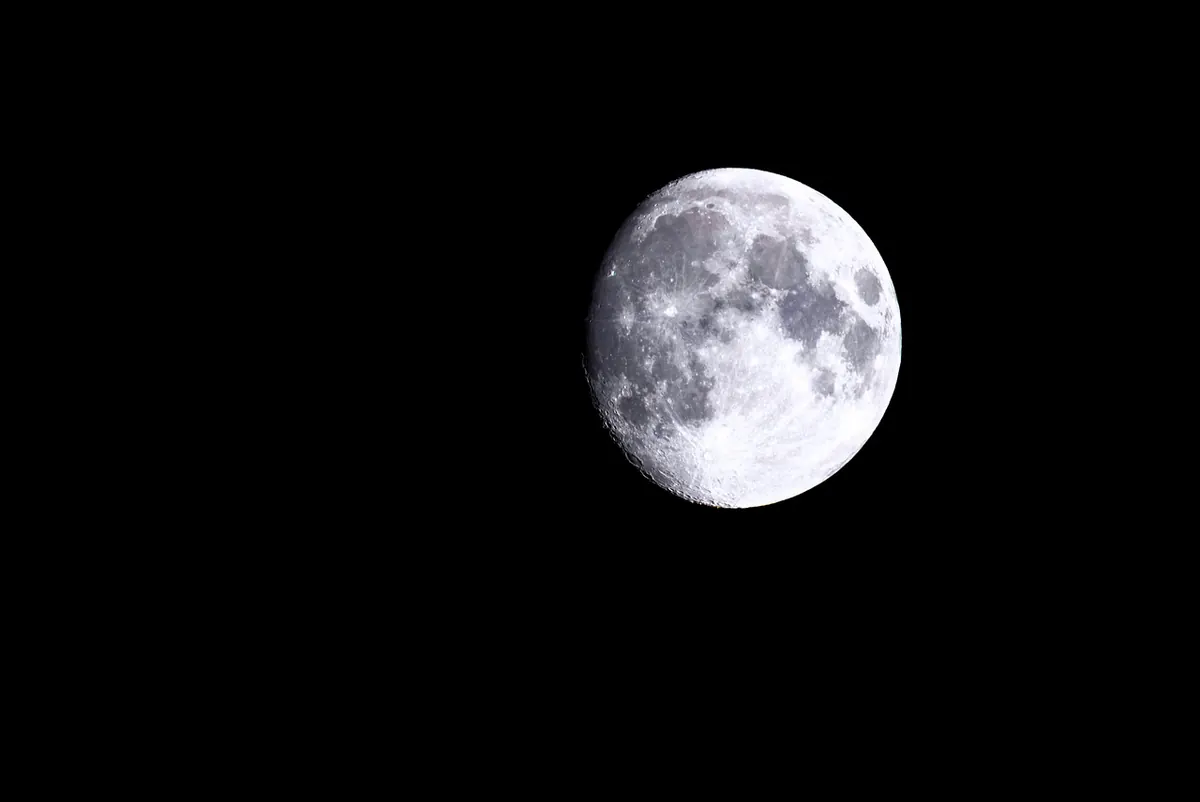
- The familiar face rolls over. Mare Imbrium, the dark patch that reads as the Man in the Moon's eye and cheek, ends up nearer the bottom of the disk. Tycho's bright ray system, which northern viewers find toward the lower part of the Moon, sits higher up.
- The horns aim elsewhere. A crescent that points up and left in one hemisphere points down and right in the other.
- Nothing about the phase itself changes. Waxing is still waxing. The illuminated fraction at a given moment is identical for everyone on Earth.
When the Crescent Lies Flat
Around the equinoxes, observers in the tropics get the strangest version of this. Because the ecliptic stands close to vertical there, a young crescent after sunset sits almost directly above the spot where the Sun went down, so the lit edge faces the ground and the Moon looks like a bowl or a smile. Before dawn, the waning crescent rises with the Sun beneath it as well, and it also appears lit from below. People who grow up at high latitudes often assume those flat crescents are photographs taken with the camera rotated. They are not; they are just taken from a different place on the globe.
What Stays the Same Everywhere
The phase sequence is universal. Everyone sees the Moon wax from new to full and wane back again over about a month, rising in the east and setting in the west regardless of hemisphere. The illuminated fraction at any given moment is the same worldwide, so if you and a friend on the other side of the planet look up at the same hour, you are seeing the same amount of sunlight on the same lunar surface, arranged differently against your two skies.
It is worth separating this from libration, the slow nodding and wobbling of the Moon that lets us peek around its edges over time and reveals about six-tenths of the surface. Libration shifts features by a few degrees and is a real change in what faces us. The upside-down effect is not a change in the Moon at all.
How to See the Flip for Yourself
A few minutes on a clear night will prove the whole thing better than any diagram.
- Pick an evening with a visible crescent, early enough that the sky still shows where the Sun went down.
- Hold your phone level and photograph the Moon on its own, without zooming past the point where the image turns to mush.
- Sketch the crescent relative to your horizon. Note which way the horns point and which side is bright.
- Open a planetarium app, set it to the same date and time, and switch the location between your city and one at a similar latitude in the opposite hemisphere.
- Rotate your photo 180 degrees and compare it with the app's southern view. The craters should line up.
- For the real test, ask someone in the other hemisphere to photograph the Moon at the same moment in universal time and send it over. Same phase, opposite lean.
The next time a crescent looks wrong, you will know exactly what you are seeing: not a Moon that has turned over, but a horizon that has. Take a step south, and the whole sky slowly rearranges itself around you.
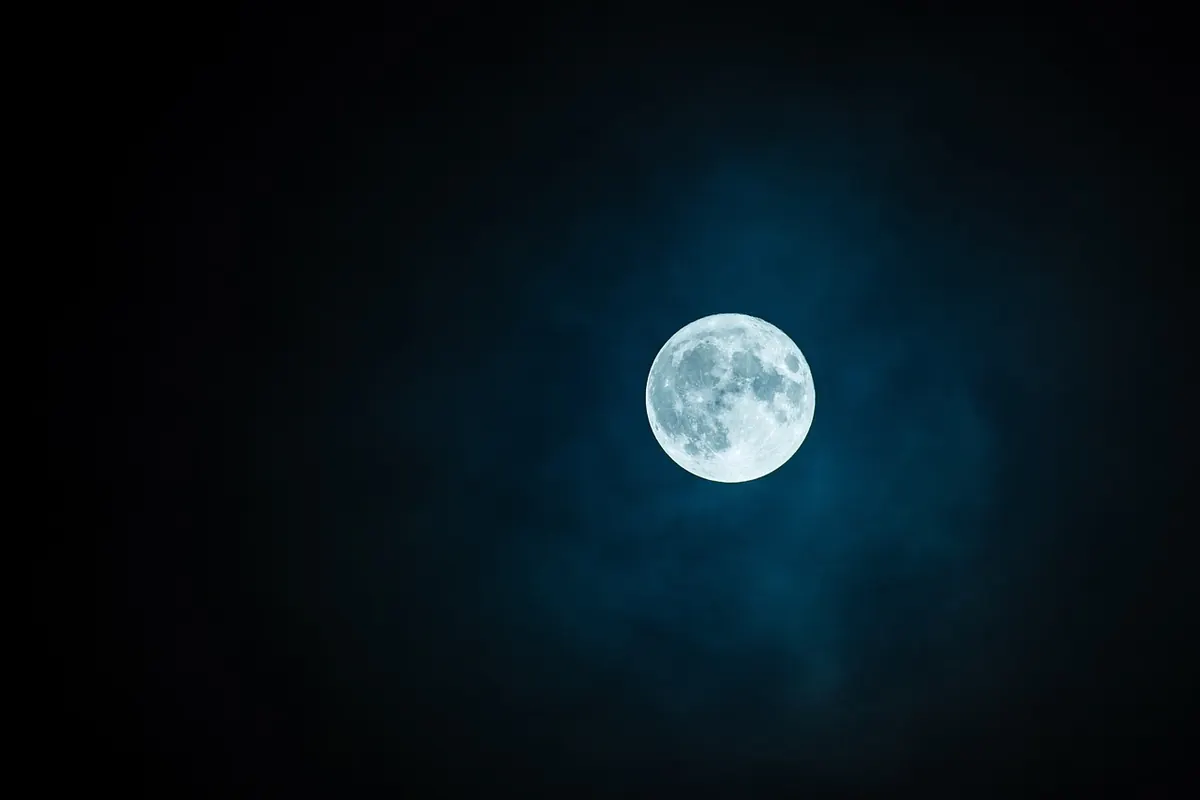
Photo: rkarkowski / Pixabay
How to Plan a Moonlit Landscape Photography Session
Plan a moonlit landscape shoot by choosing the right phase, timing the moonrise, dialing in exposure, and...
Sidereal vs Synodic Month: Why Lunar Calendars Drift
The Moon returns to the same stars every 27.32 days, but its phases take 29.53 days. That 2.2-day gap...